What Is a Cell Phone Signal Booster and How Does It Work?
Cell Phone Boosters: A Closer Look
If your office, commercial building, or workplace struggles with reliable cell phone reception, you may have heard of cell phone signal boosters. They are also commonly used in homes and vehicles where weak signal leads to dropped calls, slow data, or unreliable service.
But how do cell phone boosters work? And do cell phone boosters work well enough to make a noticeable difference? Let's take a closer look.
First, What is a Cell Phone Signal Booster?
So, what is a cell phone signal booster? It's a system designed to improve cellular connectivity by capturing an existing outdoor signal, strengthening it, and distributing it in areas where reception is weak. This can help reduce dropped calls, failed texts, and slow mobile data inside buildings and vehicles.
Cell phone boosters are often described as either Passive DAS or Hybrid DAS. Passive DAS is most common in homes, vehicles, and smaller business spaces. Hybrid DAS, on the other hand, is typically used in medium to extra-large commercial buildings that need a more scalable approach to distributing cellular signal.
For a deeper look at how these systems differ, see our guide to Passive DAS vs. Hybrid DAS.
How Do Cell Phone Boosters Work?
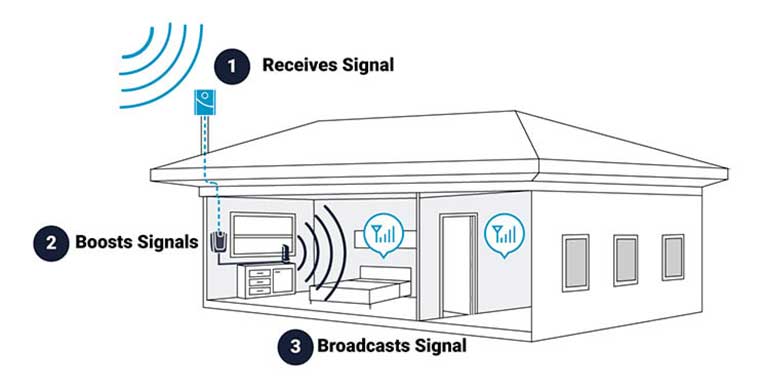
A cell phone signal booster relies on several connected components working together. The outside antenna captures available cellular signal, the amplifier strengthens it, and the inside antenna redistributes it where coverage is needed.
Here is what happens at each stage:
1) Capture Off-Air Cellular Signal
Cell phone boosters depend on an existing cellular signal. They do not generate signal independently. An outside antenna, also called a donor antenna, is typically installed on the roof or another elevated exterior location, where it can capture available 5G and 4G LTE signals from nearby cell towers.
There are two main types of donor antennas:
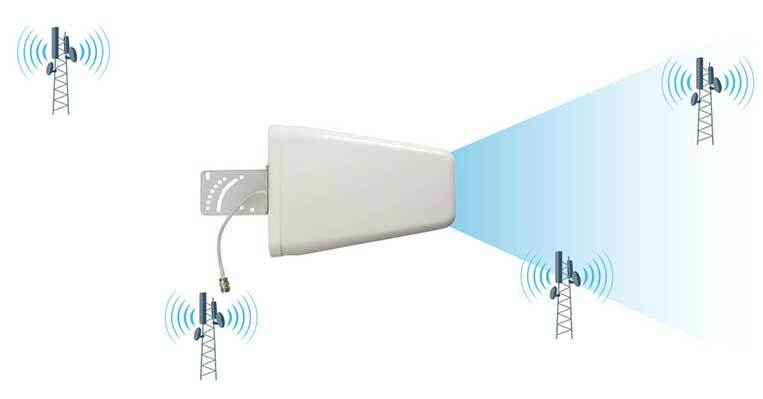
Directional donor antennas send and receive signal within a focused beam and must be aimed toward the desired carrier's tower. Panel, Yagi, LPDA, and parabolic grid antennas are all directional designs. Because they concentrate reception in one direction, they are often a strong choice for weak-signal areas or locations where one or two towers provide the best service. These types of antennas are commonly paired with building cell phone boosters and stationary RV units.
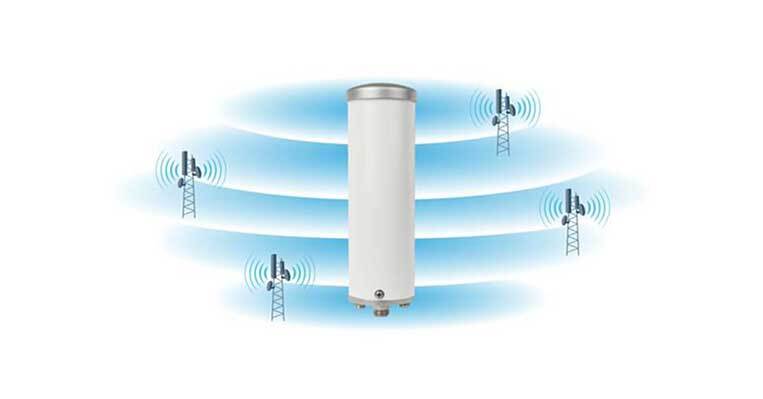
Omnidirectional donor antennas send and receive signal in a 360-degree pattern. They do not need to be aimed at a specific tower, which simplifies installation. They are often used when viable signals come from multiple directions or carriers. These types of antennas are commonly paired with vehicle cell phone boosters and some building boosters.
When comparing donor antennas, you may see a maximum gain rating listed in dBi. This specification indicates how strongly the antenna focuses on signals coming from a particular direction. In general, a higher dBi rating can improve signal capture over greater distances, but the best antenna still depends on tower location, signal conditions, and the carriers being boosted.
2) Amplify Cellular Signal
The amplifier, also called the booster, does the legwork. Coaxial cable carries the captured cellular signal from the outside antenna to the amplifier. The amplifier then strengthens 5G/4G LTE signals before distributing them to the inside antennas.
Evey cell phone signal booster is designed and approved to support specific cellular frequency bands. A booster cannot improve a signal on a band it is not designed to support.
There are two types of amplifiers:
- Multi-carrier amplifiers can boost signals from several carriers at the same time. They are often well suited for offices, commercial buildings, and other shared spaces where users rely on different networks.
- Single-carrier amplifiers are designed to support one carrier at a time. Because the system is dedicated to a single network, it can often provide stronger performance for that carrier.
Three specifications are especially useful when comparing amplifiers:
- Gain, expressed in decibels (dB), measures how much the amplifier can increase the incoming signal. A higher gain rating generally gives the system more ability to strengthen a weak signal.
- Uplink output power affects how effectively the cell phone booster can transmit signal back to the tower. This is especially important in areas where outdoor signal is weak, or the nearest tower is farther away.
- Downlink output power affects how much amplified signal the system can distribute indoors. Higher downlink output can support broader coverage, provided the donor signal, cabling, antenna placement, and building conditions are also favorable.
These specifications represent the amplifier's maximum capabilities. The booster automatically adjusts its gain and output powers to remain within Federal Communications Commission (FCC) operating requirements and avoid harmful interference with the carrier network.
Performance depends on existing cellular signal conditions.
dB vs. dBi Gain: dB measures how much an amplifier increases or loses signal strength. dBi describes how an antenna focuses signal in a particular direction.
3) Route the Signal Through the System
Once the signal has been captured and amplified, that signal must be carried to the inside antenna for distribution throughout the coverage area. The type of cabling used depends on the system's DAS architecture.
In a typical Passive DAS setup, coaxial cable connects the amplifier to the server antennas. Coaxial cable is dependable and widely used for carrying cellular signals, but some signal is lost as it travels through the cable. Longer cable runs, coax cable type, connectors, splitters, and higher frequencies can all increase that loss. Using the right cable and keeping runs as short and direct as possible helps preserve more of the amplified signal.
Hybrid DAS systems often use Ethernet or fiber for longer runs, followed by shorter coaxial connections near the server antennas. Ethernet and fiber can carry the signal over greater distances with little to no signal loss, making these systems more scalable for large or complex buildings. The tradeoff is that Hybrid DAS equipment and installation generally cost more than a fully coax-based Passive DAS cell phone booster.
4) Rebroadcast Cellular Signal
The inside antenna, also called the server antenna, receives the amplified signal and distributes it throughout the intended coverage area. Cellular devices within that area will then automatically receive a stronger signal for voice, text, and mobile data.
Home and office units commonly use:
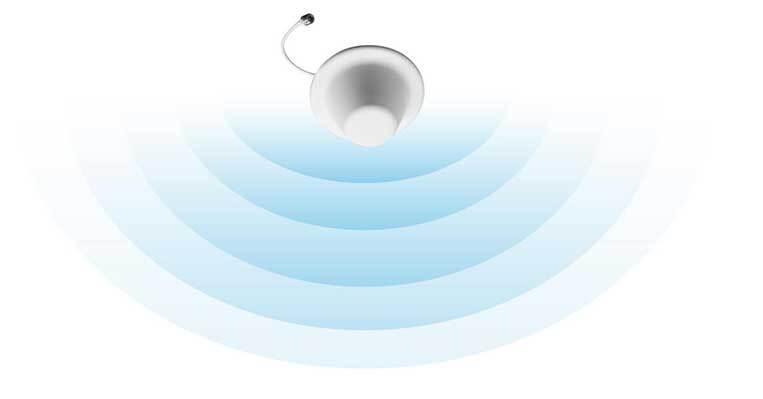
Dome Antenna: Omnidirectional, these ceiling-mounted antennas broadcast equal amounts of cellular signal in every direction. Thus, they are best for open-concept layouts.
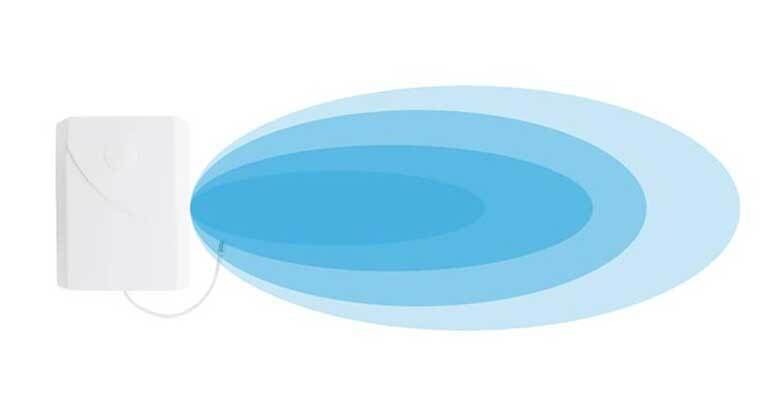
Panel Antenna: Directional, these wall or ceiling-mounted antennas focus their power in a single direction. Radiation beam ranges from 45 to 70 degrees. They are great for hallways or high-ceiling areas.
Vehicle units, on the other hand, commonly use:
- Patch Antenna: This is the most common type of antenna paired with vehicle cellular signal boosters. They are directional and easy to install.
- Desktop Antenna: These antennas are directional and can be placed on any flat surface a few feet from the booster. You have the flexibility to move it around so it can cover your desired area. They are kitted with RV boosters.
Server antennas also have a gain rating measured in dBi. This does not mean the antenna creates additional signal power. Instead, it describes how effectively the antenna concentrates and directs the amplified signal. In general, a higher dBi antenna can project signal farther in its intended direction, though it may cover a narrower area.
The coverage you get depends on more than the square footage listed for the system. The strength of the outdoor signal, amplifier output, cable loss, antenna placement, server antenna capabilities, interior walls, and overall layout all affect performance. A system advertised for a certain number of square feet may cover less in a heavily divided concrete building, or more in an open space with a strong starting signal.
Do Cell Boosters Really Work?
Yes, cell phone boosters do work when there is an existing outdoor signal for the system to capture and the equipment is properly installed. The amount of improvement depends on the starting signal, building layout, cable runs, antenna placement, and the booster's capabilities.
Real-world installations show how significant that improvement can be:
At the 6,500-square-foot HERO Martial Arts Academy in Spring, Texas, a metal roof and interior walls left cellular service barely usable. After a SureCall Fusion5X 2.0 system was installed, average signal readings improved across all carriers:
| AT&T | From -122 dBm to -77 dBm |
| Verizon | From -111 dBm to -72 dBm |
| T-Mobile | From -120 dBm to -72 dBm |
Those gains took the building from unreliable service to dependable cellular coverage throughout the facility. See our guide on cell phone signal strength to learn more about dBm readings.
At YES Prep North Central Elementary, a 90,000-square-foot school in Spring, Texas, dropped calls and weak indoor service affected staff and teachers across the campus. A CEL-FI QUATRA 4000c Hybrid DAS was installed in approximately two days. After installation, measured signal reached -48 dBm for AT&T and -47 dBm for both Verizon and T-Mobile across major areas of the school.
Boosters can also produce meaningful results in residential settings. At the 8,500-square-foot Johnson residence in Blaine, Washington, calls frequently dropped and often had to be reconnected several times. After a CEL-FI QUATRA 4000 system and three indoor antennas were installed, the homeowners reported clear calls and consistent coverage throughout the home, including the ability to move from room to room without losing service.
Installation matters
Proper antenna placement, system sizing, and cable routing all affect performance.
If you're a business, Signal Boosters offers turnkey support with site assessment, system design, and professional installation. If you're installing a booster at home or in a vehicle, call our team at 1-800-470-6777 for help finding a qualified local installer.
Cell Phone Boosters That Actually Work
There are a lot of subpar boosters out in the market. So, it only makes sense to be skeptical about their legitimacy. All of our boosters are approved by the FCC, ensuring they work as claimed.
Here are some of the most popular cell phone boosters that actually work:
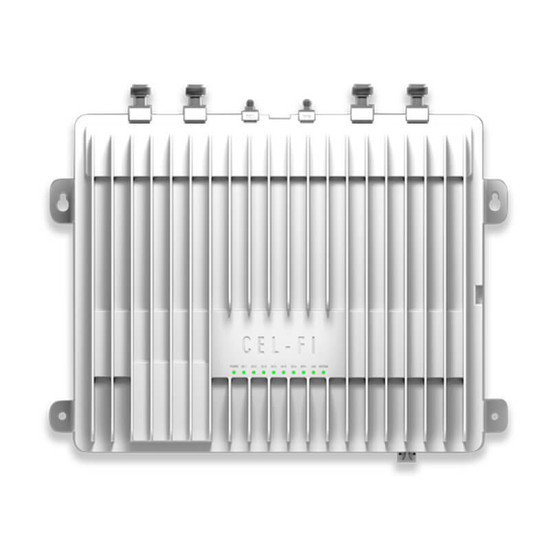
QUATRA 4000c

CEL-FI GO G41

Fusion4Home
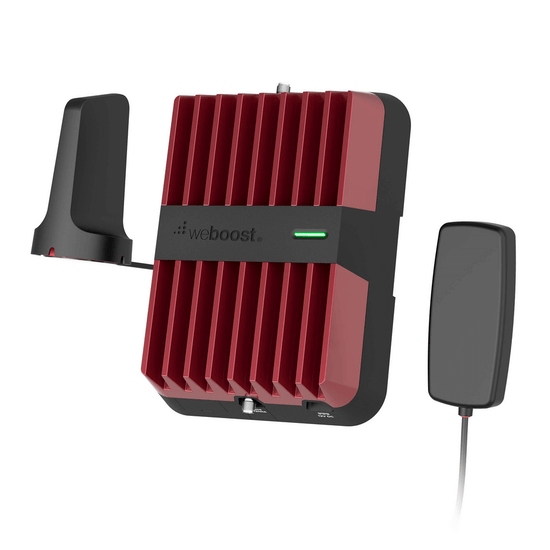
Drive Reach
Need coverage for a commercial property? Explore other commercial cell phone signal boosters for offices, warehouses, schools, healthcare facilities, retail spaces, and other business environments.
Looking for a smaller system? Shop signal boosters for homes, small offices, cars, trucks, RVs, boats, and other vehicles.
FAQs
A cell phone booster is ideal when:
- Outdoor cellular reception is usable, but indoor coverage is poor.
- Outdoor cellular reception and indoor cellular coverage are poor.
Yes. FCC-certified signal boosters, including the systems sold here by Signal Boosters, are legal to use when they are installed and operated according to FCC requirements and the manufacturer's instructions.
So, why are cell phone boosters illegal according to some online sources? The confusion largely comes from older, uncertified, poorly designed, or improperly installed boosters that could interfere with carrier networks. In 2013, the FCC established new rules requiring consumer boosters to meet its Network Protection Standard and receive FCC certification. Consumer users may also need to register the booster with their wireless provider and obtain the provider's consent.
The benefits of a cell booster include:
- Fewer dropped calls
- Improved call quality
- Reliable texting
- Enhanced data speeds
- Greater coverage
- Longer battery life
- And More!
No, signal boosters do not need an internet connection to work. They just need electrical power and an existing signal.
Cell phone signal boosters are not designed to work outdoors. They are meant to improve indoor cellular reception and coverage. If used outdoors, they can cause harmful interference with nearby cell phone towers.
Yes. As long as there is a sliver of cellular signal, a signal booster will work in rural and remote areas. Depending on how far your closest cell tower is, a more powerful antenna may be needed to improve range.
For more information, visit Cell Phone Boosters for Rural Areas.
Yes. Using coaxial cable, signal boosters are able to bypass metal walls and roofs keeping cell signal out.
All of our signal boosters are 5G ready and will boost any 5G signals operating on the supported frequency bands.
For more information, see our 5G cell phone boosters guide.
A cell phone signal booster can be worth the investment when weak reception is disrupting calls, mobile data, business operations, or customer and employee communication. A properly designed system can improve coverage without requiring users to connect to WiFi or change carriers.
There are real tradeoffs. Boosters have an upfront equipment cost, and larger commercial systems may require professional design and installation. They also need an existing outdoor signal to amplify, so they are not a solution for a complete cellular dead zone. The value depends on the severity of the problem, the size of the coverage area, and how important dependable cellular service is to the people using the space.
Stop Letting Weak Cell Signal Disrupt Your Business
Dropped calls, delayed texts, and unreliable mobile data can slow down daily operations and make it harder for employees, customers, and visitors to stay connected. A cell phone booster can help, but the best results come from choosing a system that matches your building, carriers, outdoor signal, and coverage needs.
The Signal Boosters team can help evaluate your space, recommend the right system, and coordinate professional installation. Call 1-800-470-6777, email sales@signalboosters.com, or request a consultation to take the next step toward more reliable cellular coverage.
Interested in Learning More? Check Out Our Cellular Info Hub / WiFi Info Hub