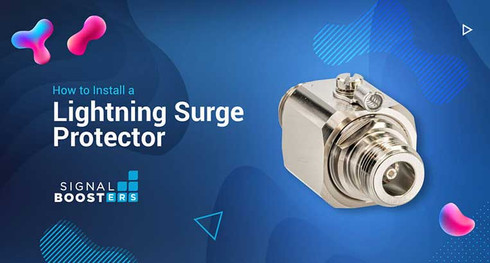
Lightning Surge Protector: What is it & How to Install it
Protect Your Signal Booster From Lightning Damage
So, you've installed a cell phone signal booster and are excited about finally eliminating poor cell service inside your home. But have you thought about how you'll protect your booster from lightning surges?
Because your outdoor antenna is mounted on the roof and exposed to the elements, it can be vulnerable to electrical surges caused by nearby lightning. Adding a lightning surge protector helps safeguard your signal booster, your connected equipment, and your investment.
Below, we'll explain why lightning surge protectors matter and how to install and ground one correctly.


Take advantage of our system design and installation services. Learn more or call us for a free consultation: 1-800-969-8189.
What Is a Lightning Surge Protector?
A lightning surge protector, also known as a lightning surge arrester or lightning arrester for an antenna, is a safety device designed for use with cell phone signal boosters.
A surge is a rapid increase in electrical energy, often caused by nearby lightning or electrical disturbances. These spikes can travel along coax cables connected to outdoor antennas and damage connected equipment if left unprotected.
It's installed in-line with the coax cable that connects the outdoor antenna and cellular amplifier. Its role is to limit how much electrical energy can reach your equipment during a surge.
How Does a Lightning Surge Protector Work?
When a nearby lightning strike or electrical disturbance causes a sudden voltage spike, a lightning surge protector reacts by controlling how that excess energy moves through the system.
Instead of allowing the surge to continue into your signal booster, the protector creates a safer path for the energy to dissipate through grounding.
How the Protection Happens
- Surge Detection: When voltage rises above normal levels, the surge protector reacts almost instantly.
- Energy Diversion: Excess electrical energy is redirected away from the coax cable path that feeds your booster.
- Continued Operation: Normal signal levels are still allowed to pass through, so your booster can continue operating.
What's Inside a Coaxial Surge Protector?
Lightning surge protectors used with cell phone signal boosters use a gas discharge tube. Inside the surge protector, a gas-filled tube responds to voltage spikes like this:
| Normal Operation |
| Electrical energy stays within safe levels and continues along the coax cable |
| ↓ |
| Voltage Spike Occurs |
| Electrical energy rises above safe levels |
| ↓ |
| Gas Activates Inside the Protector |
| A temporary path to ground is created |
| ↓ |
| Excess Energy is Diverted |
| Electrical energy is sent down the ground wire instead of toward the booster |
| ↓ |
| Surge Ends |
| Gas deactivates, and normal operation resumes |
What Surge Protectors Can (and Can't) Handle
Lightning surge protectors are designed to handle repeated small surges and the occasional larger spike caused by nearby lightning or electrical disturbances. They are not intended to protect against direct lightning strikes, which can overwhelm any surge protection device.
This is why proper grounding is so important. Without a ground, the surge protector has nowhere to send excess electrical energy, making it far less effective.
How to Install and Ground a Lightning Surge Protector
Installing and grounding a lightning surge protector is not a difficult job, it can be done in 3 easy steps. But, if you aren't comfortable doing it yourself, don't be afraid to calling an electrician.
Step 1: Make Sure You Have the Correct Lightning Surge Protector
Before installation, confirm that the lightning surge protector matches your signal booster's impedance rating (impedance simply describes how easily an electrical signal moves through your system). Most systems use either 50 Ohm or 75 Ohm components, and the ratings must match for proper performance and protection.
As a general rule:
- 50 Ohm systems typically use SMA or N-type connectors
- 75 Ohm systems typically use F-type connectors
If you're unsure which type your system uses, checking the connector style is often the easiest way to confirm.
Step 2: Install the Lightning Surge Protector Between the Antenna and Booster
The lightning surge protector should be installed in line between your outdoor antenna and the coax cable that connects to your signal booster. This placement helps stop electrical surges before they travel into your home or reach your equipment.
Most lightning surge protectors use double female connectors, as do many outdoor donor antennas. Because of this, a short jumper coax cable is typically needed to make the connection. One end of the jumper cable connects to the antenna, and the other connects to the lightning surge protector.
Once the surge protector is connected to the antenna, attach the coax cable that runs to your signal amplifier to the remaining port on the surge protector.
Because this cable enters your home, the lightning surge protector should be installed outside, as close as possible to the point where the cable enters the building. This helps reduce the risk of electrical damage and potential fire hazards.
Step 3: Ground the Lightning Surge Protector
Proper grounding is one of the most important parts of installing a lightning surge protector. Without a ground, the surge protector has nowhere to send excess electrical energy, which means it cannot do its job effectively. Instead of being safely redirected, that energy can continue traveling into your signal booster and potentially cause damage.
To ground the surge protector, the National Electrical Code (NEC) recommends using a solid copper ground wire no smaller than 10 AWG.
Attach one end of the ground wire to the grounding lug or eyelet on the surge protector. If the wire is insulated, strip about one inch of insulation before securing it. Use pliers to ensure the connection is tight and secure.
The ground wire should be long enough to reach your grounding point, but kept as short and direct as possible. Avoid sharp bends, loops, or coiling the wire, as these can reduce effectiveness. Braided copper wire is not recommended for this application.
Finally, attach the other end of the ground wire to an approved grounding point, such as:
- A ground rod (most common)
- A metal electrical service panel
- A water pipe
- The metal frame or structure of a building
Once grounded properly, the surge protector can safely redirect excess electrical energy away from your system.
Note: Grounding requirements can vary by location. Always check local electrical codes before completing installation.
Shop Lightning Surge Protectors
A lightning surge protector is a small addition that can help protect a signal booster system from electrical surges. Choosing the right surge protector reduces the risk of equipment damage and service interruptions.
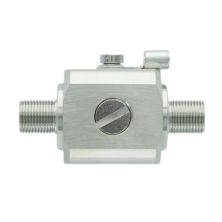
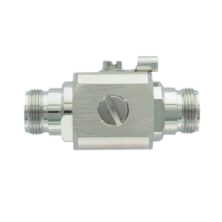
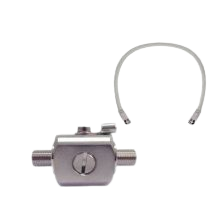
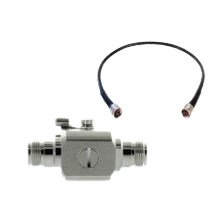
If you're not sure how to find a surge protector that matches your system, our team can help you choose the correct option. Call us today at 1-800-470-6777 to speak to a specialist.
Surge Protector FAQs
No. Without proper grounding, a lightning surge protector has nowhere to redirect excess electrical energy. In that case, the surge can continue traveling through your coax cable and into your signal booster, reducing the effectiveness of the protection.
No. Lightning surge protectors are designed to provide surge protection from lightning caused by nearby strikes, not direct hits. A direct lightning strike can overwhelm any surge protection device.
While not required for a signal booster to operate, lightning surge arresters are highly recommended for systems with outdoor antennas. It helps protect your equipment from repeated electrical surges, which are far more common than direct lightning strikes. Some manufacturers may also require a surge protector to maintain warranty coverage.
Lightning-related surges can send sudden spikes of electrical energy through cables and wiring. Without protection, that energy can damage sensitive electronics, degrade performance over time, or trigger electrical issues within your system.
Protect Your Signal Booster With Proper Surge Protection
Installing and properly grounding a lightning surge protector is a simple way to help protect your signal booster from electrical surges caused by nearby lightning and power disturbances. While no device can prevent damage from a direct strike, a lightning surge protector adds an important layer of protection that supports long-term performance and peace of mind.
Have questions or want help choosing the right surge protector? Give us a call at 1-800-470-6777 and speak with one of our specialists.