How much does a DAS system cost in Missouri?
Pricing varies depending on the building’s size, construction type, the number of carriers, and whether public safety coverage (ERCES) is required. Missouri has many older brick buildings, large metal warehouses, renovated downtown structures, and multi-level office spaces—all of which influence cabling complexity and system design.
Influencing factors include:
- Floor count and total square footage
- Dense construction materials like brick and concrete
- Carrier integration needs (Verizon, AT&T, T-Mobile, FirstNet)
- Public-safety system requirements
- Donor signal strength, which varies heavily across urban and rural zones
- Interior layout challenges such as underground areas
Most Missouri DAS deployments fall between mid-five figures to six figures depending on scope.
Do older Missouri buildings require special DAS design considerations?
Yes. Cities like St. Louis and Kansas City have many historic or pre-war buildings with:
- Thick masonry walls
- Dense concrete pillars
- Complex mechanical shafts
- Limited existing conduit space
These features can significantly weaken cellular signal.
To address this, our team:
- Conducts detailed RF mapping
- Uses alternative cable pathways
- Designs antenna layouts that compensate for structural barriers
- Coordinates with building managers to maintain historical integrity
How long does DAS installation take in Missouri?
A typical timeline includes:
- RF Testing: 1–3 days
- iBwave Design & Modeling: 1–3 weeks
- Carrier Coordination: 2–6+ weeks
- Permitting (varies by city): may add time in older metro districts
- Installation & Commissioning: several days to 12+ weeks
- Optimization & Acceptance Testing: 1 week
Most buildings are completed in 4–12 weeks, although manufacturing campuses or large hospitals may take longer.
Does DAS help in Missouri’s mixed rural and urban environments?
Yes. Missouri has wide coverage differences between cities and rural regions. Many rural or suburban buildings experience:
- Greater distance from carrier towers
- Outdoor signal fluctuations
- Building materials that further weaken weak signals
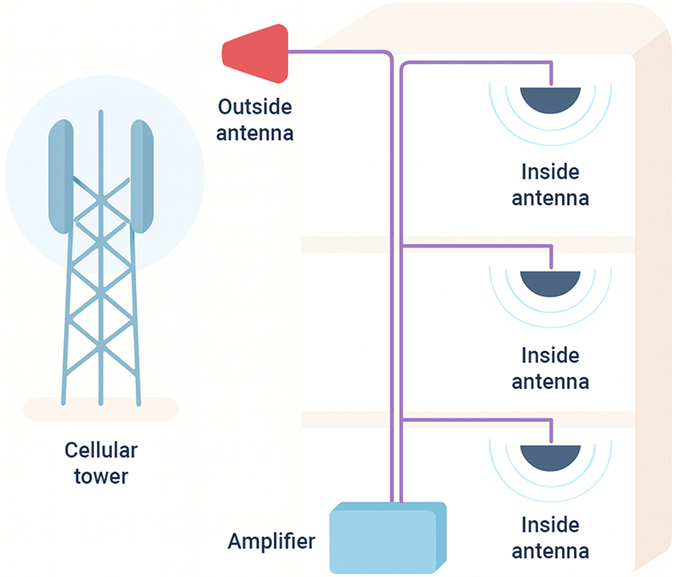
DAS strengthens indoor performance by:
- Pulling in the cleanest available donor signal
- Distributing it uniformly indoors
- Reducing call failures and data slowdowns
Facilities in rural areas often see dramatic improvements.
Which Missouri industries benefit most from DAS?
Common use cases include:
- Hospitals and healthcare campuses
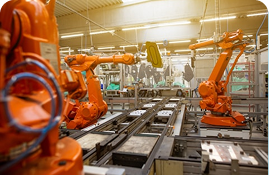
- Distribution centers and manufacturing plants
- Universities and research facilities
- Office buildings and multi-tenant properties
- Casinos, stadiums, and entertainment venues
- Government buildings and public-safety departments
Any large or reinforced structure with dead zones is a strong candidate.
Do you support all carriers in Missouri?
Yes. We integrate with:
- AT&T
- Verizon
- T-Mobile
- FirstNet (public safety)
We handle carrier submissions, testing, and approval.
Do you install public-safety DAS (ERCES) in Missouri?
Yes. We design systems that meet Missouri fire and emergency communication requirements, including:
- Coverage testing for first-responder radio
- Fire-rated components
- Battery backup solutions
- Coordination with Authority Having Jurisdiction
- Full compliance documentation
Public-safety DAS is essential for both new construction and code compliance in existing buildings.
Do you offer ongoing maintenance?
Yes. We provide:
- Annual inspections
- Performance checks
- System optimization
- Hardware upgrades
- Monitoring options
- On-call troubleshooting
Maintenance ensures long-term performance as building usage, carriers, or technology changes.