How much does a DAS system typically cost in Minnesota?
Costs depend on building type, layout, materials, and the performance level required. Minnesota’s facilities often include steel-framed industrial plants, older brick structures, or heavily insulated modern buildings—all of which significantly affect signal penetration. Common cost factors include:
Key pricing variables include:
- Square footage and building height
- Dense concrete or thermally efficient materials
- Multi-carrier integration (AT&T, Verizon, T-Mobile, FirstNet)
- Public-safety coverage needs (ERCES compliance)
- Challenging cable pathways in older or renovated buildings
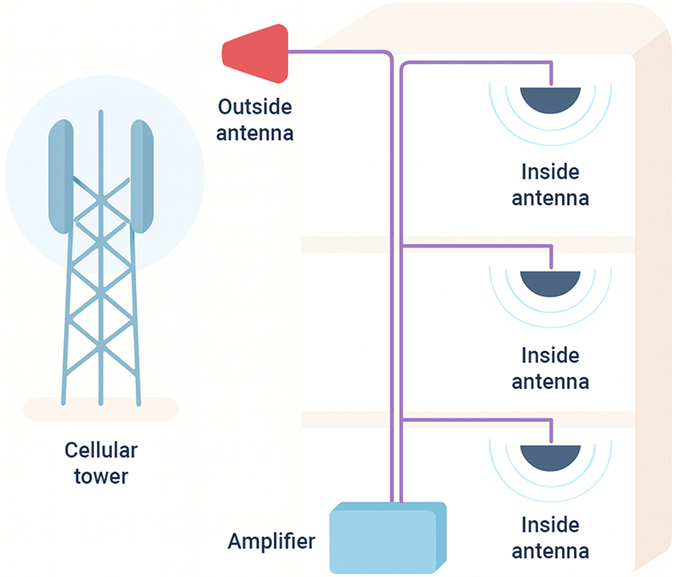
- The strength of outdoor donor signal—often weaker during winter
Most Minnesota DAS projects fall in the mid-five-figure to six-figure range, depending on complexity.
Does Minnesota’s winter climate affect DAS design or performance?
Yes. Extreme cold and frequent snow can weaken outdoor cellular signals and interfere with rooftop donor antennas. DAS ensures consistent indoor coverage by:
- Stabilizing indoor connectivity even when outdoor conditions fluctuate
- Maintaining strong signal in insulated or sealed buildings
- Reducing reliance on congested towers during storms
- Improving performance in basements and internal rooms
Rooftop hardware is also winter-rated and installed with weather protection for long-term reliability.
How long does a DAS installation take for Minnesota facilities?
Typical project timeline:
- RF Survey: 1–3 days
- iBwave Design: 1–3 weeks
- Carrier Review: 2–6+ weeks depending on approvals
- Local Permitting: Some Minnesota municipalities require additional documentation
- Installation: Several days to 12+ weeks depending on scale
- Optimization & Testing: 1 week
Most buildings are fully deployed in 4–12 weeks, though very large campuses may take longer.
Which Minnesota buildings benefit most from DAS?
DAS is commonly installed in:
- Hospitals, clinics, and research campuses
- University buildings and student housing
- Corporate headquarters and high-rise offices
- Manufacturing plants and cold-storage facilities
- Distribution centers and logistics hubs
- Retail spaces, malls, and mixed-use developments
- Hotels, casinos, and entertainment venues
- Government buildings and public-safety facilities
Any building with dead zones or inconsistent coverage is a strong candidate.
Do you support all major carriers in Minnesota?
Yes. Our DAS systems support:
- Verizon (strong presence in the Twin Cities and northern regions)
- AT&T
- T-Mobile
- FirstNet for emergency responders
We handle the full coordination process, including design submissions and acceptance testing.
Do you install public-safety DAS in Minnesota?
Yes. Our systems comply with Minnesota’s ERCES/ERRCS requirements and local AHJ standards. Our services include:
- Signal testing for fire and emergency responder frequencies
- Code-compliant pathway and survivability components
- Integration with building safety systems
- Coordination with fire marshals and inspectors
- Acceptance testing and documentation packages
Public-safety DAS is especially important in high-density buildings and medical facilities across the state.
Do you provide ongoing support after installation?
Yes. We offer:
- Annual system checks
- Monitoring options (when supported)
- Updates and adjustments
- Repair and expansion services
Maintenance ensures long-term performance as technology changes or building usage evolves.