How much does a DAS system cost in Michigan?
The cost depends on building size, interior materials, system type, and carrier requirements. Michigan has a diverse mix of building environments—from Detroit’s steel-reinforced commercial towers to older industrial plants and sprawling university campuses—each impacting the final engineering scope. Factors affecting pricing include:
- Multi-floor layouts (common in hospitals and corporate offices)
- Heavy concrete and steel used in manufacturing facilities
- Carrier integration (Verizon, AT&T, T-Mobile, FirstNet)
- Whether public-safety/ERRCS is required
- Complexity of cable routing in older buildings
- The need to overcome harsh winter interference impacting outdoor donor signals
Most Michigan DAS deployments fall between the mid-five figures and six figures, depending on scale.
How long does DAS installation take in Michigan?
Typical timeline:
- RF Survey: 1–3 days
- Design & iBwave Engineering: 1–3 weeks
- Carrier Coordination: 2–6+ weeks depending on approvals
- Municipal Permitting: Some cities—like Detroit or Ann Arbor—may require additional documentation
- Installation: Several days to 12+ weeks depending on complexity
- Final Optimization: 1 week
Most Michigan projects reach completion within 4–12 weeks, though large manufacturing or multi-building campuses may require longer.
Does DAS work in large industrial and automotive facilities?
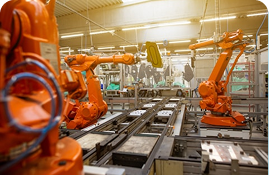
Yes. Michigan’s automotive plants, stamping facilities, distribution centers, and parts warehouses often experience severe signal blockage due to:
- Metal structures
- Machinery interference
- High ceilings and open-floor layouts
- Thick reinforced walls
A DAS system ensures stable communication for:
- Supervisors on the production floor
- IoT sensors
- Automated systems
- Safety protocols
- Logistics and warehouse operations
Will DAS improve indoor coverage during Michigan’s harsh winter season?
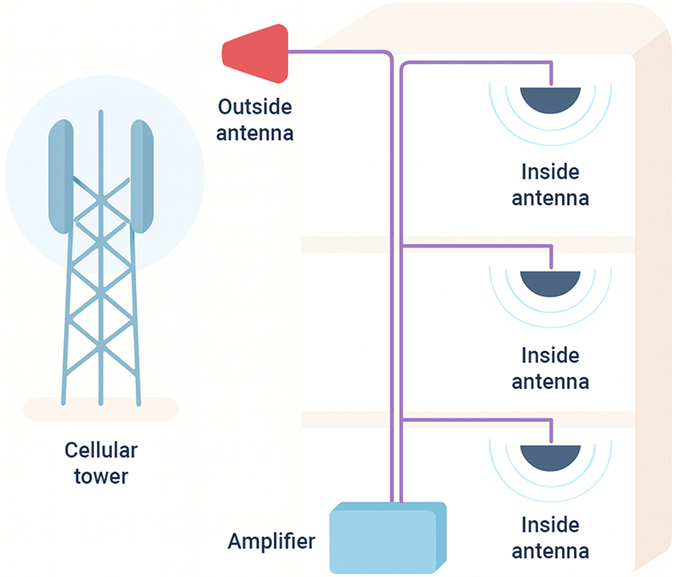
Winter storms and lake-effect weather can significantly weaken outdoor tower performance. DAS helps by:
- Amplifying the strongest available donor signal
- Delivering stable indoor coverage even when outdoor conditions fluctuate
- Reducing dependence on congested or weather-affected towers
- Improving reliability in basements and internal rooms
Facilities in Grand Rapids, Traverse City, and the Upper Peninsula see major benefits.
Do you support all major Michigan carriers?
Yes. Our DAS systems integrate with:
- Verizon (widely used in Michigan’s rural and suburban regions)
- AT&T
- T-Mobile
- FirstNet for emergency communications
We handle design submission, optimization, and carrier interaction.
Which Michigan buildings benefit most from DAS?
Common candidates include:
- Manufacturing plants and automotive facilities
- Hospitals, clinics, and large medical campuses
- College and university buildings
- Corporate offices and multi-tenant complexes
- Retail centers and malls
- Hotels, casinos, and event arenas
- Government buildings and public-safety structures
- High-density apartment and condo buildings
Any building experiencing dead zones, slow data, or inconsistent indoor coverage is a strong fit.
Do you install public-safety DAS (ERRCS) in Michigan?
Yes. We design and integrate systems that comply with Michigan’s safety and fire-code requirements, including:
- Coverage mapping for emergency responder radio bands
- Fire-rated cable pathways
- Battery backup and survivability requirements
- Coordination with local fire marshals and inspectors
- Acceptance testing and certification
Detroit, Ann Arbor, and Grand Rapids often have strict AHJ expectations—we manage compliance from start to finish.
Do you offer maintenance for Michigan DAS systems?
Yes. We provide:
- Annual testing
- Monitoring (if supported)
- Firmware and system updates
- Performance adjustments
- Repairs and expansion upgrades
Maintenance ensures reliable long-term coverage, especially for buildings with evolving layouts or equipment needs.