How much does a DAS system cost in Kansas?
Project cost varies based on building size, construction materials, required carriers, and whether public-safety radio coverage is needed. Kansas facilities range from older brick schools to massive steel industrial plants, meaning pricing can differ significantly.
Important cost factors include:
- Square footage and floorplan complexity
- Brick, concrete, or steel construction (very common across Kansas industrial sites)
- Carrier requirements (AT&T is dominant in some regions, Verizon in others)
- Need for FirstNet or public-safety coverage
- Length and difficulty of cable runs, especially in retrofits
- Donor antenna placement—tower spacing in rural Kansas may require specialized solutions
Most Kansas DAS projects fall between the mid-five figures and low-to-mid six figures, depending on scale. Accurate pricing requires an RF site survey and iBwave design.
How long does installation take in Kansas?
Timelines vary by project type, building size, and carrier approval speed. Typical Kansas deployments follow this schedule:
- RF Walkthrough & Measurements: 1–3 days
- iBwave System Design: 1–3 weeks
- Carrier Coordination: 2–6+ weeks (varies for AT&T, Verizon, T-Mobile)
- Permitting: Kansas cities like Wichita and Overland Park often review public-safety systems carefully
- System Installation: From several days (small offices) to 8–12+ weeks (large campuses or manufacturing plants)
- Final Testing & Commissioning: 3–7 days
Total project duration for most buildings in Kansas is 4–12 weeks.
Does DAS work well in rural Kansas where towers are spread out?
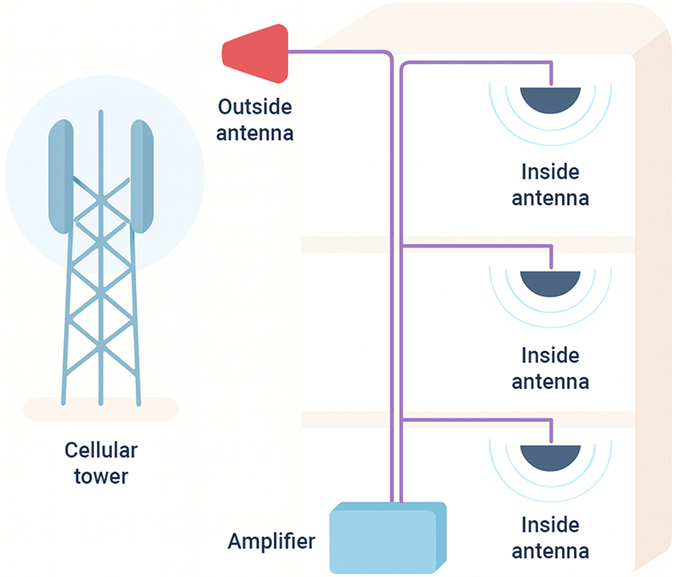
Yes — but rural Kansas often requires a more strategic approach. Because towers are spaced farther apart across agricultural and low-density regions, external signal may be weaker. Our engineers compensate by:
- Using high-gain donor antennas
- Selecting optimal tower direction based on detailed RF mapping
- Designing systems that stay stable even with fluctuating outdoor signal
- Recommending carrier-specific or multi-carrier strategies depending on rural tower availability
Even large farms, grain facilities, and manufacturing sites in rural Kansas see major improvements with DAS.
Which carriers can your Kansas DAS systems support?
We design systems compatible with:
- AT&T (strong Kansas market presence)
- Verizon
- T-Mobile
- FirstNet for public-safety and emergency communications
We handle all engineering documentation, submissions, and coordination required for carrier approval.
Which Kansas buildings benefit most from DAS?
Typical Kansas projects include:
- Hospitals and regional healthcare centers
- University buildings in Lawrence, Manhattan, and Wichita
- Steel manufacturing plants
- Large distribution and logistics facilities
- Government buildings and courthouses
- Hotels, casinos, and convention centers
- Multi-story office buildings and co-working spaces
If your building struggles with dead zones, thick walls, or high user density, DAS is often the best long-term solution.
Do you install public-safety / ERRCS systems in Kansas?
Yes. We design and install public-safety DAS systems that meet Kansas fire-marshal and AHJ requirements, including:
- Compliance testing for first-responder radio bands
- Use of fire-rated cabling and protective construction methods
- Two-hour survivability requirements (when applicable)
- Battery backup and power redundancy
- Close coordination with Kansas inspectors and local authorities
Cities like Wichita, Overland Park, and Kansas City enforce strict public-safety DAS standards, especially for new construction and renovations.
Do you provide maintenance and annual testing?
Yes — Kansas clients can choose from:
- Recurring maintenance programs
- Scheduled re-testing (common for Kansas public-safety compliance)
- On-demand service calls
- Remote monitoring options (system-dependent)
- Full as-built documentation and performance logs
Our support ensures your DAS continues to perform at peak levels year after year.