How much does a DAS system cost in Colorado?
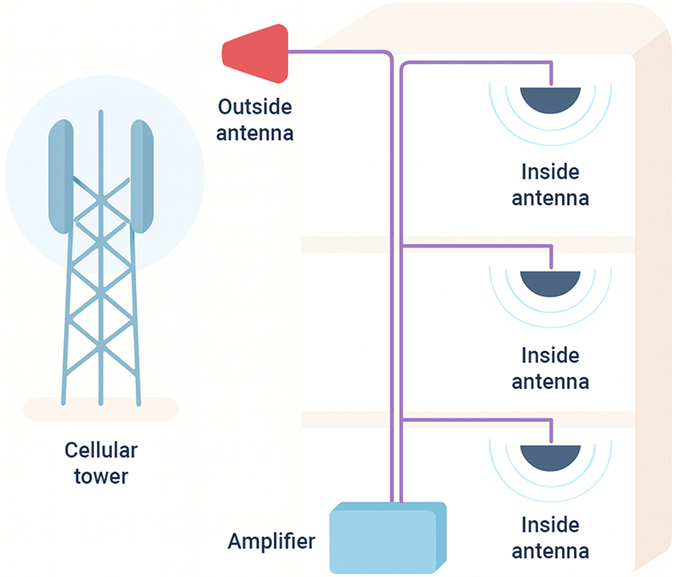
Costs vary depending on the building’s square footage, structural materials, number of carriers, and overall coverage goals. Colorado buildings often use concrete, stone, steel framing, and energy-efficient glass - materials that increase design complexity and may require additional antennas or cabling. Smaller commercial facilities may start in the low tens of thousands, while multi-level hospitals, downtown high-rises, ski resorts, and university buildings may require six-figure budgets. Mountain properties or remote locations may also require specialized donor-antenna engineering due to fluctuating outdoor signal. A full RF survey and iBwave design are required for accurate pricing.
Does Colorado’s high altitude affect DAS performance?
Yes - Colorado’s elevation impacts both radio-frequency propagation and outdoor donor-signal reliability. Higher altitudes can:
- Increase line-of-sight to towers in some areas
- Reduce signal penetration in dense, insulated buildings
- Cause wider fluctuations in outdoor signal levels
- Impact temperature-sensitive equipment
We engineer DAS systems specifically for altitude-induced signal behavior and use climate-rated components to ensure consistent performance year-round.
How does DAS handle Colorado’s extreme temperature swings?
Colorado buildings experience wide temperature variations - from below freezing in winter to 100°F+ in summer. These shifts can affect cabling expansion, rooftop equipment durability, and amplifier performance. Our installations use:
- Temperature-rated coax and fiber
- Weatherproof rooftop enclosures
- Secure mounts designed for high-wind mountain gusts
- Equipment with wide temperature operating ranges
This ensures stable operation in both Front Range cities and high-altitude regions.
Can DAS improve connectivity in mountain towns and ski resorts?
Yes. Mountain environments often suffer from:
- Weak donor signal due to terrain
- Limited tower density
- Buildings built with heavy timber, stone, and metal
- Multi-property resort layouts
We design DAS systems with high-gain donor antennas, directional alignment, and redundancy to ensure consistent indoor coverage - even when outdoor signal is unstable.
Do you support all major carriers in Colorado?
Yes. Our DAS solutions are fully carrier-neutral and support Verizon, AT&T, T-Mobile, and all required LTE and 5G frequencies. We handle all engineering submissions, carrier coordination, and on-site testing required for approval. In dense areas like downtown Denver and Boulder, we design for high user density; in mountain and rural areas, we engineer for weaker outside signal sources.
Which Colorado building types benefit the most from DAS?
DAS is highly effective in:
- LEED-certified office buildings
- Hospitals & medical campuses
- Mountain resorts & lodges
- Warehouses, distribution centers & industrial plants
- University research labs & classroom facilities
- Large hotels, convention centers & entertainment venues
- Government buildings, courthouses & public-safety centers
Any building with thick walls, metal framing, environmental insulation, or dense occupancy is an ideal candidate.
Do you install public-safety DAS (ERRCS/BDA) in Colorado?
Yes. We design and install fully compliant Emergency Responder Radio Coverage Systems (ERRCS/BDA) that meet Colorado’s fire code requirements. Services include:
- RF testing for first responder frequencies
- AHJ coordination with Colorado fire marshals
- Code-compliant design for coverage requirements
- Acceptance testing and final documentation
- Optional annual recertification and performance monitoring
Public-safety DAS is often required for occupancy approval in new and renovated buildings across the state.
Who handles system maintenance after installation?
We offer on-demand service, scheduled maintenance plans, system monitoring, and annual performance checks. Colorado facilities often benefit from ongoing support due to weather exposure, temperature swings, and multi-carrier traffic loads. Maintenance ensures your DAS continues operating efficiently and remains code-compliant.