How much does a DAS system cost in Arizona?
Pricing depends on building size, materials, required carriers, and whether the system supports public-safety communications. Arizona’s concrete structures, metal roofs, and energy-efficient designs often require additional planning and equipment. Small facilities may begin in the low tens of thousands, while large medical centers, high-rises, resorts, and industrial campuses can reach six figures. Buildings in rapidly developing areas like Phoenix and Chandler may require enhanced capacity for heavy device usage. A site survey and iBwave design are essential for accurate pricing.
Does Arizona’s extreme heat affect DAS equipment?
Absolutely. Outdoor donor antennas, rooftop equipment, cabling, and enclosures must withstand temperatures commonly exceeding 110°F. We use heat-rated materials, weatherproof mounts, and ventilation strategies to ensure long-term durability. Indoor components are also selected for performance in buildings that experience high attic temperatures or fluctuating HVAC loads.
Does DAS work in Arizona buildings with metal roofs or stucco construction?
Yes—DAS is specifically engineered to overcome those barriers. Many Arizona buildings use:
- Metal roofing (which blocks signal)
- Stucco over wire mesh
- Insulated concrete forms (ICF)
- Reflective/low-e windows
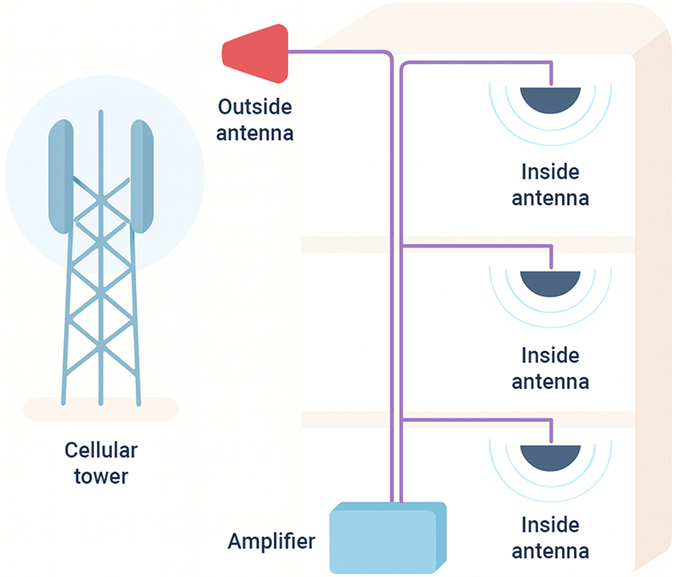
These materials severely limit indoor coverage. A properly engineered DAS bypasses those obstructions by distributing signal indoors.
Do you support all major carriers in Arizona?
Yes. Our systems support Verizon, AT&T, T-Mobile, and all relevant LTE/5G bands. We manage all coordination, including design submissions and on-site acceptance testing. In metro areas like Phoenix and Tucson, we tailor capacity for dense user environments; in suburban and rural areas, we optimize donor-antenna placement to compensate for weaker outdoor signal.
Which Arizona buildings benefit the most from DAS?
Common use cases include:
- Hospitals and medical centers
- Manufacturing & semiconductor plants
- Warehouses and distribution facilities
- Hotels, resorts, casinos & entertainment venues
- Universities and large school campuses
- Government buildings & public-safety facilities
- Corporate offices, high-rises & mixed-use towers
If your building struggles with dropped calls, dead zones, or high user volume, DAS is the ideal solution.
Do you provide public-safety DAS (ERRCS/BDA) in Arizona?
Yes. We install Emergency Responder Radio Coverage Systems (ERRCS/BDA) that meet Arizona fire code requirements. Services include:
- On-site first responder RF testing
- Code-compliant design for fire, EMS & police radio frequencies
- Coordination with Arizona fire marshals and AHJs
- Acceptance testing & final sign-off
- Optional annual recertification and remote monitoring
These systems are often required for occupancy approval in new or renovated buildings.
Who handles system maintenance after installation?
We offer multiple options, including scheduled maintenance plans, remote monitoring, annual checks, and on-demand service calls. Arizona buildings exposed to extreme heat, large square footage, or heavy device usage often benefit from periodic optimization to maintain peak performance.