How much does a DAS system cost in Alaska?
Costs vary significantly due to building type, structural materials, remote accessibility, and the complexity of Alaska’s environmental conditions. Small commercial buildings may start in the low tens of thousands, while larger hospitals, energy facilities, airports, and multi-building sites can reach six figures or more. Remote locations may require additional logistics planning, winter-weather equipment, or specialized cabling. A site survey and iBwave engineering design are necessary to determine exact pricing and coverage expectations.
Does Alaska’s extreme weather impact DAS installation or performance?
Yes—Alaska’s freezing temperatures, heavy snowfall, and strong winds affect equipment selection and installation planning. We use weather-rated components, insulated cable pathways, and ruggedized enclosures designed to withstand below-zero conditions. When rooftop donor antennas are needed, we install secure mounts engineered for winter storms. All DAS hardware is selected to operate reliably in Alaska’s climate year-round.
Will DAS work in remote regions or locations with limited outside signal?
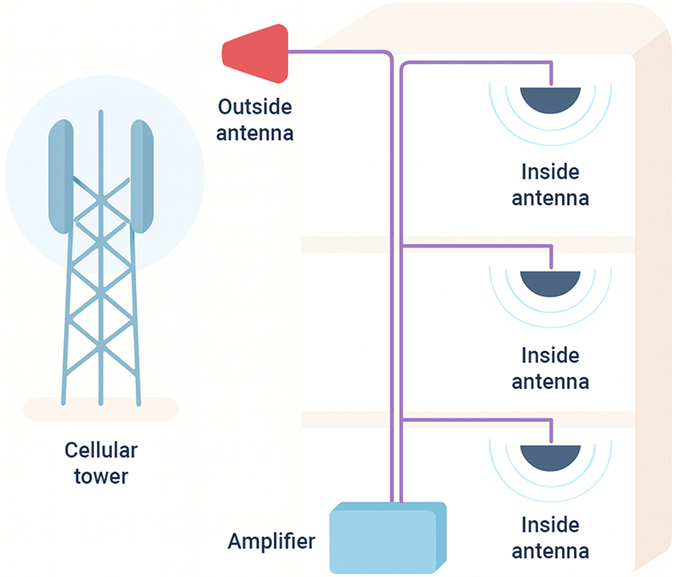
DAS can absolutely work in remote Alaska, even with weak outdoor signal, as long as a donor source is engineered correctly. For locations such as oil sites, marine facilities, or isolated research buildings, we:
- Use high-gain donor antennas
- Optimize line-of-sight to distant towers
- Implement advanced amplification
- Engineer redundancy for reliability
Our systems are specifically designed to support communication where tower density is low.
Do you support all major carriers in Alaska?
Yes. We install carrier-neutral DAS systems compatible with AT&T, Verizon, T-Mobile, and applicable regional or private network requirements. We assist with design submissions, carrier approvals, and on-site acceptance testing. In areas where carrier coverage varies widely, we tailor the system to support the strongest and most relevant networks.
Which buildings in Alaska benefit the most from DAS?
DAS is commonly deployed in:
- Energy production and processing facilities
- Metal warehouses and industrial workshops
- Hospitals, emergency clinics, and tribal health centers
- Educational campuses and research buildings
- Logistics hubs, aviation facilities, and seaports
- Government and utility buildings
- Resorts, lodges, and tourist centers
Any building with thick insulation, heavy steel structures, or large indoor spaces sees significant improvements with DAS.
Do you install public-safety DAS (ERRCS/BDA) in Alaska?
Yes—we design and install fully compliant public-safety DAS systems that support emergency responder radio coverage. Our services include:
- On-site RF testing for first-responder frequencies
- Code-compliant ERRCS system design
- Coordination with Alaska fire marshals and AHJs
- Acceptance testing for occupancy approval
- Long-term maintenance, monitoring & recertification
Public-safety DAS is especially important in Alaska where building materials and remote settings can cause dangerous communication gaps.
Who maintains the DAS system after installation?
We offer flexible maintenance options for Alaska facilities, including on-demand service, annual inspections, and continuous monitoring. Maintenance is recommended for buildings experiencing heavy usage, extreme weather exposure, or operational changes that may affect performance. Our team ensures the system stays compliant, optimized, and performing to carrier standards.