How much does a DAS system cost in Alabama?
Costs vary based on building materials (steel, concrete, brick), square footage, number of floors, desired carrier support, and whether public-safety DAS is required. Small Alabama facilities may start in the low tens of thousands, while large industrial plants, hospitals, and multi-building campuses can exceed six figures. Rural locations may also require specialized donor-antenna configurations to pull in reliable outside signal before distributing it indoors. A detailed RF survey and iBwave design are necessary to provide an accurate quote.
How long does installation take?
Timelines depend on building complexity, engineering needs, materials, and carrier review. Most Alabama DAS deployments follow this timeline:
- RF survey: 1–5 days
- iBwave design: 1–3 weeks
- Carrier coordination: 2–6 weeks
- Installation: several days to multiple weeks depending on square footage
- Final optimization & documentation: ~1 week
Large Alabama industrial sites, hospitals, and multi-campus facilities may require phased construction and extended carrier testing.
Does DAS work well in Alabama’s rural areas?
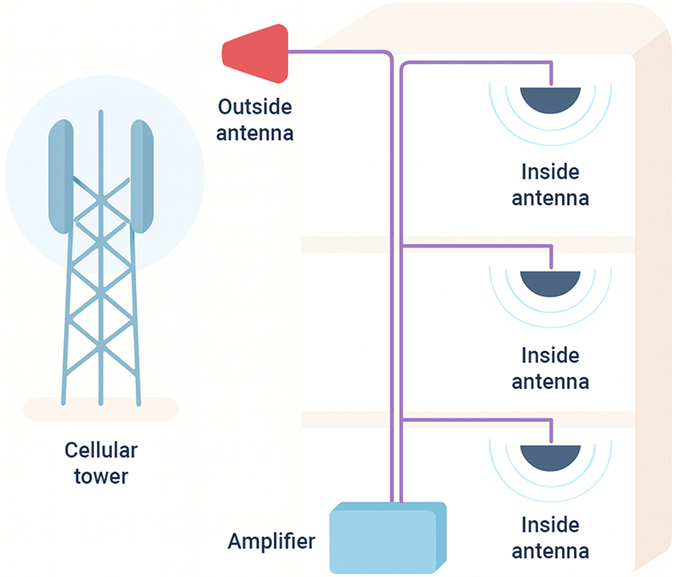
Yes. Many Alabama rural communities have weaker outdoor signal due to tower spacing, terrain, and network congestion. In these cases, DAS still works effectively when paired with the proper donor antennas and engineering approach. Our team evaluates signal sources and designs a system that boosts and distributes coverage indoors even in areas with limited outside signal strength.
Do you support all major carriers in Alabama?
Absolutely. Our systems support Verizon, AT&T, T-Mobile, and all major LTE/5G bands used throughout Alabama. We manage all carrier design submissions, testing procedures, and approval workflows, ensuring your system meets performance requirements for each carrier you choose to support.
Which Alabama building types benefit most from DAS?
DAS is commonly deployed in:
- Hospitals and medical buildings with thick walls
- Warehouses and automotive manufacturing facilities with metal structures
- Universities and multi-story educational buildings
- Government and municipal buildings needing ERRCS compliance
- High-rise office buildings with dense user loads
- Retail centers and multi-tenant developments
- Logistics and distribution hubs across the state
Any building experiencing weak indoor signal or high device usage is an ideal DAS candidate.
Do you install public-safety DAS (ERRCS/BDA) in Alabama?
Yes. We design and install fire-code–compliant Emergency Responder Radio Coverage Systems (ERRCS/BDA) meeting the requirements of Alabama’s local authorities having jurisdiction (AHJs). Services include:
- First-responder frequency testing
- Code-compliant design
- Coordination with inspectors and fire officials
- Acceptance testing & documentation
- Optional annual recertification and monitoring
Public-safety DAS is often mandatory in new construction or major renovations.
Who handles maintenance after installation?
We offer optional maintenance plans that include remote monitoring, equipment checks, performance optimization, and annual testing. You may also request on-demand service at any time. Many Alabama facilities choose scheduled maintenance to keep their DAS system compliant and performing at peak efficiency.