What Is Power Over Ethernet (PoE)? A Clear Guide to How It Works
A Simple Guide to Power over Ethernet
We've recently added cellular routers and switches with PoE+ support to our portfolio. It's a feature that can make network setups much easier. If you're not familiar with Power over Ethernet, it's simply a way to send power and data through the same cable. No extra outlets, no separate power adapters.
In this guide, we'll explain what PoE is, how it works, and how to decide whether a PoE-enabled switch or router is a good fit for your home or business.


Take advantage of our system design and installation services. Learn more or call us for a free consultation: 1-800-969-8189.
What Is PoE or PoE+?
Power over Ethernet, often shortened to PoE, is a networking technology that sends data and electrical power through the same Ethernet cable. Instead of running a separate power line to each device, PoE lets the Ethernet cable (usually a Cat5e or Cat6 cable) carry both the network connection and the power needed to operate the device.
PoE+ stands for Power over Ethernet Plus. It works the same way as standard PoE but delivers higher wattage, which is useful for devices that need a bit more power, such as pan-tilt-zoom cameras or more advanced wireless access points.
PoE Power Levels
Not all PoE standards deliver the same amount of power. Each standard defines how much power can be sent over an Ethernet cable and how much a connected device can safely receive. Because a small amount of energy is lost during transmission, the power available to the device is slightly lower than the maximum output.
The chart below shows how the different PoE standards compare and can help you determine which level is appropriate for your equipment.
|
Standard |
Name |
Maximum Power Output |
Power Available to Device |
|
802.3af |
PoE |
Up to 15.4W |
About 12.95W |
|
802.3at |
PoE+ |
Up to 30W |
About 25.5W |
|
802.3bt Type 3 |
PoE++ or 4PPoE |
Up to 60W |
About 51W |
|
802.3bt Type 4 |
High-Power PoE++ |
Up to 90-100W |
About 71-90W |
Most small businesses and home setups only need PoE or PoE+, while larger or more power-hungry equipment may need PoE++.
Not sure what you need? Call our team at 1-800-470-6777 to speak to a signal expert today.
Common Uses of PoE
Power over Ethernet is widely used in small businesses, remote setups, and IoT environments. Because it lets devices receive both power and data through a single Ethernet cable, a PoE setup simplifies installation, reduces cable clutter, and allows your devices to be placed where power outlets aren't readily available.
Here are the most common PoE-powered devices you'll see today:
- Wireless Access Points (APs): APs often need to be mounted high on walls or ceilings to get the best coverage, and outlets aren't always nearby. PoE removes that limitation.
- Security Cameras: Both indoor and outdoor cameras benefit from PoE since it avoids running separate power lines and allows installers to place cameras exactly where they're needed.
- Sensors (IoT devices): Environmental sensors, occupancy sensors, and similar devices typically use PoE for consistent power and reliable data transfer in smart buildings.
- Point of Sale (POS) Systems: Many terminals, card readers, and check-out devices use PoE to stay connected and powered, especially in kiosks or retail setups with limited outlets.
- Other Networked Devices: Intercoms, VoIP phones, digital signage, and access control panels often rely on PoE for the same reason: cleaner installs and fewer cables.
In short, PoE is especially useful anywhere equipment needs dependable power and a stable network connection, but is installed in a place where outlets are limited or hard to reach.
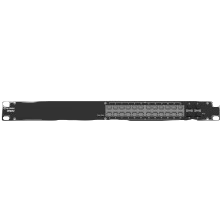
Switch with 24 PoE+ and 4 SFP ports, eliminating the need for external power supplies and allowing long-haul fiber uplinks.
Learn MoreHow Does Power over Ethernet Work?
At its core, Power over Ethernet works by sending low-voltage electrical power along the same twisted-pair copper wires inside a standard Ethernet cable that carries network data. Instead of running a separate power adapter to each device, PoE allows both power and data to travel through a single Ethernet connection.
How PoE and PoE+ Deliver Power
- A PoE or PoE+ switch sends both data and power through an Ethernet cable such as Cat5e or Cat6.
- Inside the cable, specific wire pairs are used to carry electrical power while other pairs carry data.
- The connected device, like a camera or access point, automatically detects the power and draws only what it needs.
- PoE+ works the same way, but delivers more wattage for higher-powered devices.
This "smart negotiation" between the switch and the device ensures compatibility and prevents overload.
PoE vs Non-PoE Setups
Here's the core difference:
- Non-PoE setup: Each device needs two connections: 1) a network cable for data, and 2) a separate power cable and nearby outlet.
- PoE setup: Each device needs only one cable: a single Ethernet line that provides both data and power.
This means fewer cables, fewer power adapters, and freedom to install devices in locations that don't have outlets such as ceilings, outdoor walls, hallways, or remote areas.
Using PoE with a PoE Switch
When a network switch supports PoE or PoE+, it can deliver both power and data directly to connected devices through a single Ethernet cable. In this setup, no additional equipment is needed. The PoE switch supplies power, the Ethernet cable carries both power and data, and the device receives everything through one connection.
This is the most straightforward PoE configuration and is commonly used for powering devices like access points, cameras, and VoIP phones in modern networks.
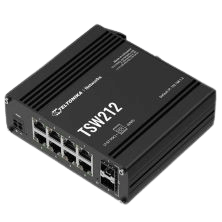
Switch with 8 PoE+ and 2 SFP ports, providing the scalability and range needed for robust network infrastructure.
Learn MoreUsing PoE with a Non-PoE Switch
In some setups, the network switch or router does not support PoE. In these cases, you can still power PoE devices by adding a midspan power source.
The most common midspan solution is a PoE injector, which sits between the non-PoE switch or router (depending on your setup) and the device. The injector adds power to the Ethernet line while the switch continues to provide data. This lets you use existing switches without replacing your entire network.
Advantages and Disadvantages of PoE
Power over Ethernet has become popular because it solves several challenges in network design, especially when installing devices in hard-to-reach areas. Like any technology, though, it has its trade-offs. Here's a look at the main benefits and limitations.
Advantages of PoE
- Less cable clutter: One Ethernet cable handles both power and data, which cuts down on wiring and creates a cleaner, more organized setup.
- Flexible device placement: You can install devices in ceilings, hallways, outdoor walls, or other spots without worrying about nearby electrical outlets.
- Simplified installation: There's no need for separate power adapters or electricians. A PoE-capable switch handles everything through the network cable.
- Centralized power management: Because all power runs through the network equipment, you can manage it from a single point. This makes it easier to reboot, monitor, or schedule connected devices.
- Reliable performance: In structured networks, PoE tends to be more stable and consistent than using multiple wall adapters or extension cords.
Disadvantages of PoE
- Requires PoE-compatible hardware: To power devices directly, you need a PoE or PoE+ switch, or you must add a PoE injector for non-PoE switches. (See graphic above)
- Distance limitations: Standard Ethernet cables can carry power and data up to about 100 meters (328 feet). Beyond that, performance drops and power loss can occur.
- Higher upfront cost: PoE switches are typically more expensive than standard switches. However, the savings in installation labor and wiring often balance out the initial cost.
Do I Need a Cellular Router or Switch with PoE?
Whether you need PoE really comes down to how and where your devices are installed. If you want cleaner wiring, easier setups, or the flexibility to place cameras, access points, or sensors in areas without nearby outlets, a PoE-enabled router or switch can make your network far more efficient. It simplifies installation, reduces clutter, and gives you more control over how your devices are powered.
If you think PoE could benefit your setup, our team can help you choose the right equipment. Give us a call at 1-800-470-6777 or explore our PoE switches and routers here.